
Environmental Responsibility
At Day Group, environmental responsibility is embedded across every part of our business, from how we manage materials and operate our sites to how we transport products and reduce emissions.


Environment Agency
Band A Operator

Members of Environmental
Services Association

In-House WAMITAB
Qualified Managers
Compliance and Environmental Management
All our waste handling sites operate under Environmental Permits issued by the Environment Agency. These permits define the activities we are authorised to carry out and the pollution control measures we must implement. All sites are subject to regular inspections, achieving an Environment Agency Band A rating, fully compliant, across every facility.
To uphold these standards, we employ fully qualified Technically Competent Managers (TCMs) who manage our recycling operations on a day-to-day basis, ensuring strict compliance and operational control.

Managing Our Environmental Impact
Alongside regulatory compliance, we actively reduce our environmental footprint through targeted initiatives:
Resource Efficiency by Design
Our Engineering team designs and develops infrastructure to reduce energy demand, minimise dust and noise, and deliver long-lasting, efficient facilities.
Water Management
We reduce reliance on mains water through rainwater harvesting, wastewater recycling, and the use of boreholes and river abstraction.
This approach supports water conservation while maintaining effective dust suppression across our sites.
Renewable Energy
Solar panel arrays are installed at multiple depots, with further rollouts planned.
Some locations already export excess energy back to the grid, supporting lower-carbon operations.
Transport and Logistics
Our extensive rail network across the South enables us to transport large volumes of aggregates off the road network, reducing congestion, emissions, and the overall environmental impact of deliveries into urban areas.
Reducing Carbon and Improving Efficiency
Our Streamlined Energy and Carbon Reporting (SECR) framework enables us to measure and manage emissions across the business. Alongside this, we continue to implement practical improvements across our operations.
Fleet and Transport Efficiency
- Transition to Euro 6 compliant vehicles
- Introduction of hybrid and electric vehicles
- Advanced telematics systems to monitor fuel use, idling, and driver performance
- Driver training programmes to support lower-emission driving

Operational Efficiency
- LED lighting upgrades across depots and offices
- Energy-efficient plant and equipment
- Solar PV installations and planning of battery storage solutions
- Modern HVAC systems and energy-efficient building design
Modal Shift to Rail
Our use of rail freight has removed approximately 14 million road miles per year, delivering significantly lower CO₂ emissions – around 76% less compared to road transport.

Circular Economy in Action
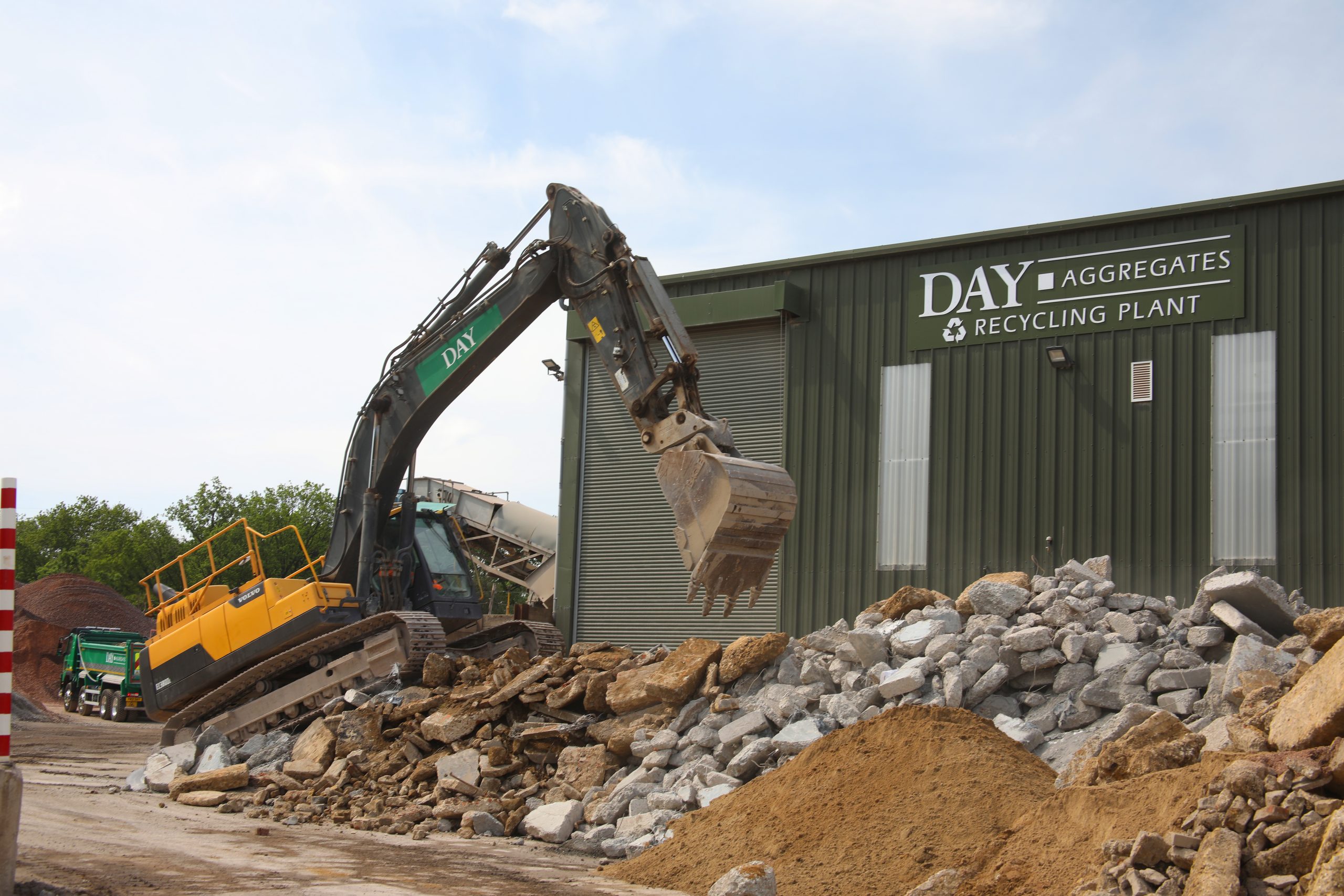
Transforming waste into high-quality recycled aggregates is central to our environmental strategy. We reduce reliance on primary resources and support more sustainable construction practices.
of our business involves processing waste into reusable materials
25
of material handled is sent to landfill
0.1
Continuous Improvement
Reducing environmental impact is an ongoing priority.
Through continued investment, innovation, and monitoring, we are committed to
improving energy efficiency, lowering emissions, and supporting a more
sustainable built environment.